Mobile Jump Start & Flat Battery Help in Oxford & Oxfordshire
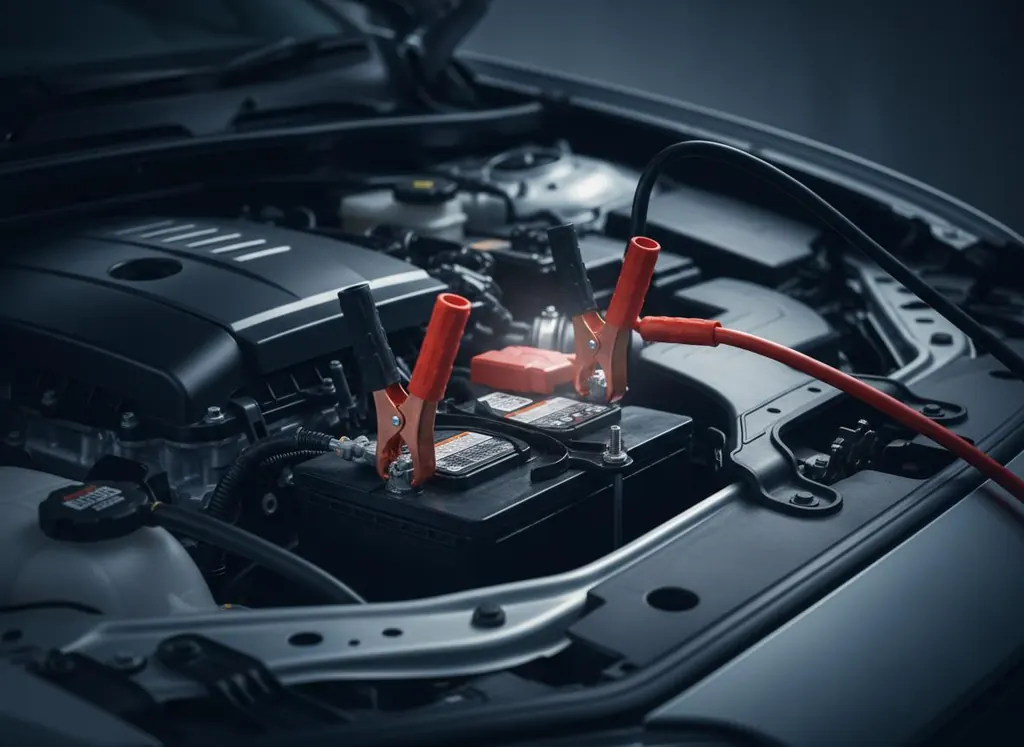
A flat battery on a cold morning does not need a recovery truck. We come to you anywhere in Oxford and Oxfordshire, usually within 30 to 45 minutes, and get the car running with professional jump start equipment rather than a set of dubious clamps. Just as importantly, we tell you honestly whether the battery will get you through next week or whether it is finished.
Prefer to know the cost first? See how our pricing works.
What's included
- Jump start using professional-grade equipment, safe for modern electronics
- A check of the battery terminals and earth connections for corrosion and looseness
- An honest assessment of whether the battery is likely to hold a charge
- Advice on whether the fault looks like the battery, the alternator or a parasitic drain
- Guidance on the drive needed to put real charge back in
- 24/7 availability, 365 days a year
- No call-out charge
How it works
Call us with the car details
Make, model, engine size and whether it is petrol, diesel, hybrid or stop-start. It changes the kit we use.
We connect properly
Correct polarity, correct earth point, and equipment rated for modern vehicle electronics. Getting this wrong is an expensive mistake on a modern car.
Start and assess
Once it is running we look at how it behaves — that is what tells us whether the battery is merely flat or actually dead.
You get a straight answer
Drive it and it will be fine, or replace the battery soon, or this is not a battery problem at all.
Flat, or dead?
These are different problems with different answers, and it is worth knowing which you have before you spend money. A flat battery has simply been discharged — interior light left on, a door not shut properly, a few weeks standing still, or a run of short cold journeys that never let the alternator catch up. Charge it properly and it is fine.
A dead battery has lost its capacity and will not hold charge no matter what you do. Most car batteries last somewhere between three and five years, and the failure is usually sudden from the driver's point of view even though it has been coming for months. The classic signs are a car that cranks slowly for a few mornings, needs a couple of tries when cold, or goes flat again within days of a jump.
Cold weather exposes both. A battery loses a significant share of its available cranking power near freezing, while a cold engine needs more to turn over — which is why so many batteries die on the first genuinely cold morning of the year rather than gradually in October.
When it is not the battery
Sometimes the battery is the symptom rather than the cause, and we will tell you when it looks that way. A failing alternator will not replace the charge the starter used, so the car starts off a jump, runs while it is running, and is flat again tomorrow. The battery warning light staying on with the engine running, dimming headlights at idle or a whine that rises with revs all point that way.
A parasitic drain is something staying awake after you lock the car — an aftermarket dashcam wired into a permanent live, a failing module that will not go to sleep, a boot or glovebox light that never switches off. The signature is a car that is flat after two or three days standing, repeatedly, with a battery that tests fine.
And a few "flat batteries" are not electrical at all. If the dashboard lights up brightly, the starter clicks once or does nothing, and nothing changes when we jump it, you are usually looking at a starter motor, an immobiliser or a security fault instead.
- Flat again within a day of a jump — suspect the alternator
- Flat after a few days standing, repeatedly — suspect a parasitic drain
- Bright dash but a single click — suspect the starter or immobiliser
- Slow cranking on cold mornings for weeks — the battery is on its way out
After a jump start: do this
The most common mistake is jumping the car, driving three miles to work and being surprised it is flat again at five o'clock. Starting the engine takes a lot out of a battery and idling barely replaces it. Give the car a decent continuous run — roughly 30 minutes or more at road speed, not stop-start town driving — so the alternator can put meaningful charge back.
Better still, if the car will be standing or does mostly short journeys, use a mains battery charger or a smart trickle charger overnight. That does something a 20 minute drive genuinely cannot.
Be aware too that some cars need a little attention afterwards: stop-start systems may stay disabled until the battery management system relearns the state of charge, and on some models the radio, windows or sunroof need resetting after a power interruption.
What this service is, and is not
To be clear about scope, because it saves everyone a wasted journey. This is a mobile jump start and battery assessment service. We get vehicles running, we check and clean up terminal and earth connections, and we give you a considered opinion about what is actually wrong.
We are not a recovery operator and we do not carry out electrical diagnostics or alternator and starter replacement. If the fault turns out to be one of those, we will say so plainly and point you at what you actually need rather than jumping the car repeatedly and taking your money.
Where we cover for mobile jump start
We are based in Oxford and cover the whole of Oxfordshire plus up to 25 miles beyond, including the A34, A40, A44, A420 and M40 corridors. If you are not sure whether we reach you, call and ask.
Mobile Jump Start — frequently asked questions
Is jump starting safe on a modern car?
With the right equipment and correct connection, yes. The risk with amateur jump leads is a voltage spike or a reverse-polarity connection damaging control modules, which is a genuinely expensive repair. We use equipment intended for modern vehicle electronics.
Can you jump start a diesel or a van?
Yes. Diesels need considerably more cranking current than petrol engines, particularly when cold, and our equipment is sized for that. Tell us the engine size when you call.
Can you jump start a hybrid or an electric car?
We can jump the 12 volt auxiliary battery in most hybrids, which is what typically fails and leaves the car apparently dead. We do not work on high voltage traction battery systems — that is a franchised dealer or EV specialist job.
Do you supply and fit a new battery?
Where we can source the correct battery for your vehicle we can often supply and fit it. Give us the make, model and year when you call and we will tell you straight away whether we can do it on this visit.
How long will you be?
Typically 30 to 45 minutes to reach you across Oxford and Oxfordshire, and usually only a few minutes on site once we are there.
The car went flat again the next day. What now?
That is diagnostic information, not bad luck. It almost always means the battery will no longer hold charge or the alternator is not charging it. Call us back and we will talk through which of the two it looks like.
Useful reading
Other services
- Mobile Tyre FittingNew tyres fitted and balanced at your home, your workplace or the roadside — no garage visit, no waiting room.
- Puncture RepairA proper internal repair to British Standard BS AU 159 where the damage allows it — and an honest answer where it does not.
- Locking Wheel Nut RemovalKey lost, snapped or rounded off? We extract the nut at your location and leave you with wheel nuts you can actually undo.
- Emergency Tyre ReplacementBlowout, pothole damage or a shredded tyre at 2am — we carry stock, we work nights, and there is no call-out charge.
Need mobile jump start now?
We are available 24/7 across Oxford and Oxfordshire, and we will quote you before we travel.